On a Friday afternoon in downtown Tifton, the loudest thing happening on Third Street might be a small argument over which Wimpy Kid book is the best one. That argument is happening inside a storefront called Second Thoughts Bookstore, easy to miss if you're driving past looking for parking near the courthouse. It is also, in a roundabout way, the reason Tifton has spent a quarter century telling the rest of the country it is the Reading Capital of the World.
That title is not a marketing slogan someone invented last year. It dates to a stadium ceremony on November 15, 2000, when more than 7,500 people packed the local football stadium to celebrate Tifton hitting one million Accelerated Reader points, a schoolwide reading program tracked one book at a time. CBS News covered the moment shortly after, framing it as a turnaround story for a town of about 15,000 that had watched companies pass it over because too many graduates couldn't read well enough to fill out a job application. A school librarian's weekly reading nights at the public library had, over four years, added up to something the whole town could stand behind.
That was almost 26 years ago. Titles like that do not renew themselves.
A Title That Needed Defending Twice
Sixteen years after the stadium ceremony, Tifton's own civic leaders seemed to sense the title was thinning out. In 2016, the Tift County Foundation for Educational Excellence launched a follow-on campaign called Read Aloud Capital of the World, pairing it with reading murals painted at Len Lastinger Primary and Annie Belle Clark Primary, plus outreach through Head Start and the Tifton Housing Authority. The foundation's director put it plainly at the time: people mostly already knew about the reading capital title, the problem was making sure it kept meaning something rather than becoming a plaque nobody thought about.
That the town felt the need to relaunch its own reputation just sixteen years in says something. A designation earned in a single celebratory afternoon does not sustain itself. Somebody has to keep doing the quiet, unglamorous work that earned it in the first place, year after year, long after the cameras leave.
The Bookstore That Wasn't There
For a long stretch, that quiet work had an obvious gap in it. For years, the only public bookstore most references could point to in a self-declared reading capital was a Christian bookstore on Main Street, useful for its audience but not exactly a general-interest shop where a kid could wander in looking for the next graphic novel or a parent could find a book club to join.
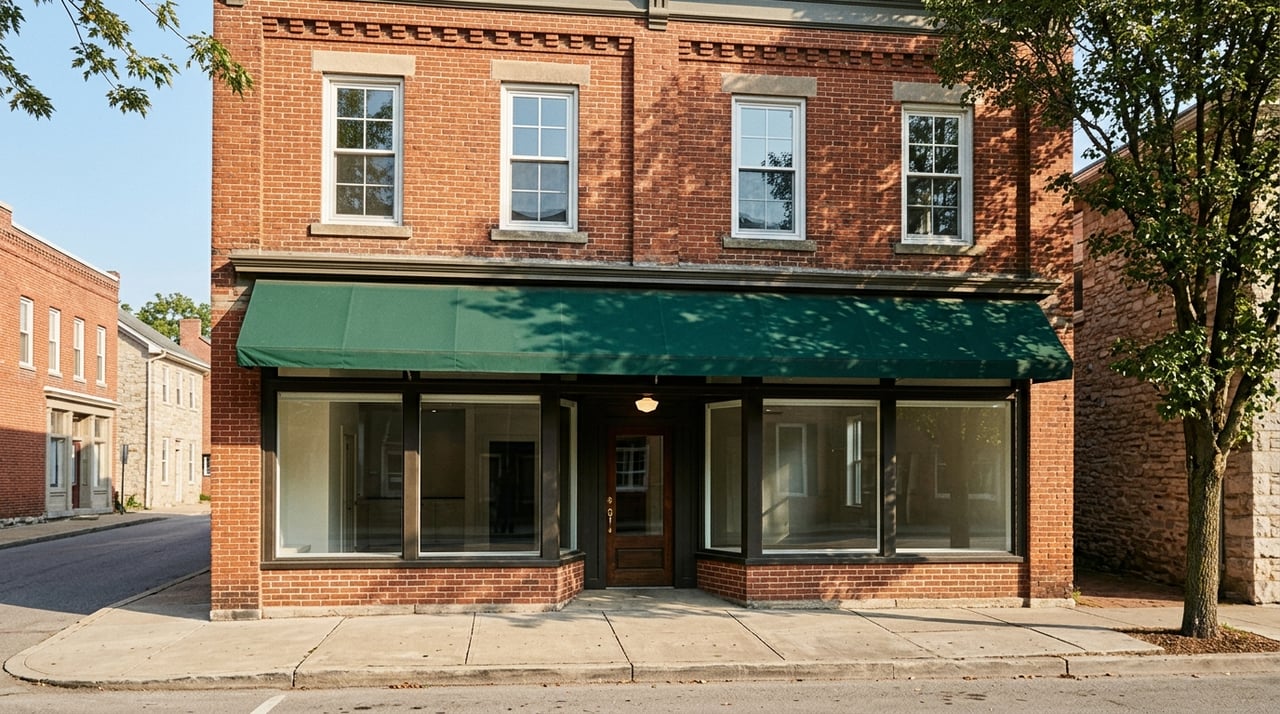
Sydney Henderson noticed that gap after she moved to Tifton and started volunteering in the community. She opened Second Thoughts Bookstore in January 2025 at 221 East Third Street, in the middle of the historic downtown core, stocking new, used, and vintage titles. She told the Tifton Gazette her decision to open a bookstore wasn't a lifelong ambition. In her own words, "this isn't a lifelong dream or anything like that." What it became, in her telling, was a passion, once she saw how much room there was in a town that had been calling itself a reading capital for two decades without a general bookstore to show for it.
The shop runs on weekend hours, open Fridays and Saturdays from 11 a.m. to 8 p.m. and Sundays from late morning. Inside that limited window, Henderson has built four monthly book clubs, including the Second Sunday Book Club, which meets every second Sunday at 3 p.m., along with regular game nights and author signings. None of that requires a big storefront or a marketing budget. It requires someone willing to show up on a weekend and keep a regular schedule long enough for people to build it into their own routines.
The Number That Actually Proves Something
Here is where the evidence gets interesting, and where a lot of coverage of small-town book culture tends to stop short. A title is easy to claim. Demand is harder to fake, and harder to hide once it shows up in attendance and logistics.
Second Thoughts hosted its second annual Bands, Booze, and Books fair on August 15, 2026. The event outgrew whatever space it used the first time around and relocated to The Peach Barn at TimberMill Acres to accommodate it. The vendor roster more than doubled between the first and second year, growing to more than 20 authors, crafters, artists, and food vendors. The second year also added extended hours, live music, an on-demand T-shirt bar, face and henna painting, outdoor games, and giveaways for the first 200 attendees through the door.
In a town of roughly 17,000 people, doubling a homegrown book fair's vendor count in a single year and needing a bigger venue to hold it is not a marketing achievement someone bought with ad spend. It is a signal that the appetite for this kind of gathering was already sitting there, waiting for someone to organize it. Henderson did not manufacture that demand. She built a container for it, and the container filled up faster than she expected.
That is the actual mechanism behind Tifton's reading capital claim in 2026. It isn't a stadium full of people once every quarter century. It's four book clubs meeting on a predictable schedule, a weekend fair that keeps needing more space, and one bookstore owner treating the town's old title as a standard to keep meeting rather than a fact to repeat.
What This Looks Like on an Actual Weekend
If you live in Tifton and want to see any of this firsthand, the entry points are specific and small enough to actually use:
- Second Thoughts Bookstore, 221 E. Third St., open Fridays and Saturdays 11 a.m. to 8 p.m., Sundays from 11 a.m.
- The Second Sunday Book Club meets every second Sunday at 3 p.m., one of four monthly book clubs running out of the shop.
- Watch for game nights and author signings, which rotate through the shop's weekend hours.
- Henderson has said she plans to extend the shop's hours into the week and grow its community programming further, so the current weekend-only schedule is likely to widen rather than stay fixed.
What a Title Actually Costs
Tifton's other well-known nickname, the Plant Center of the World, points back at agriculture, something the region has spent a century building infrastructure around. The reading capital title has never had that kind of institutional backing behind it. It has survived on a school librarian's reading nights in 2000, a mural campaign in 2016, and now a weekend bookstore run by one person who wasn't trying to inherit a legacy so much as fill an obvious hole in her adopted hometown.
That is a useful thing to notice about a place before you assume you already know it. The title on the water tower or the welcome sign is only ever as real as whoever is currently doing the work behind it. Right now in Tifton, that work has an address, a schedule, and a name attached to it.
If you're getting to know Tifton from the outside, whether you're weighing a move here or just trying to understand what makes this town tick before you commit to a neighborhood, Terri Roberts Branch has spent decades paying attention to exactly these kinds of details, the ones that don't show up on a listing sheet but tell you everything about whether a place will feel like home. Reach out anytime to talk through what you're looking for in South Georgia.