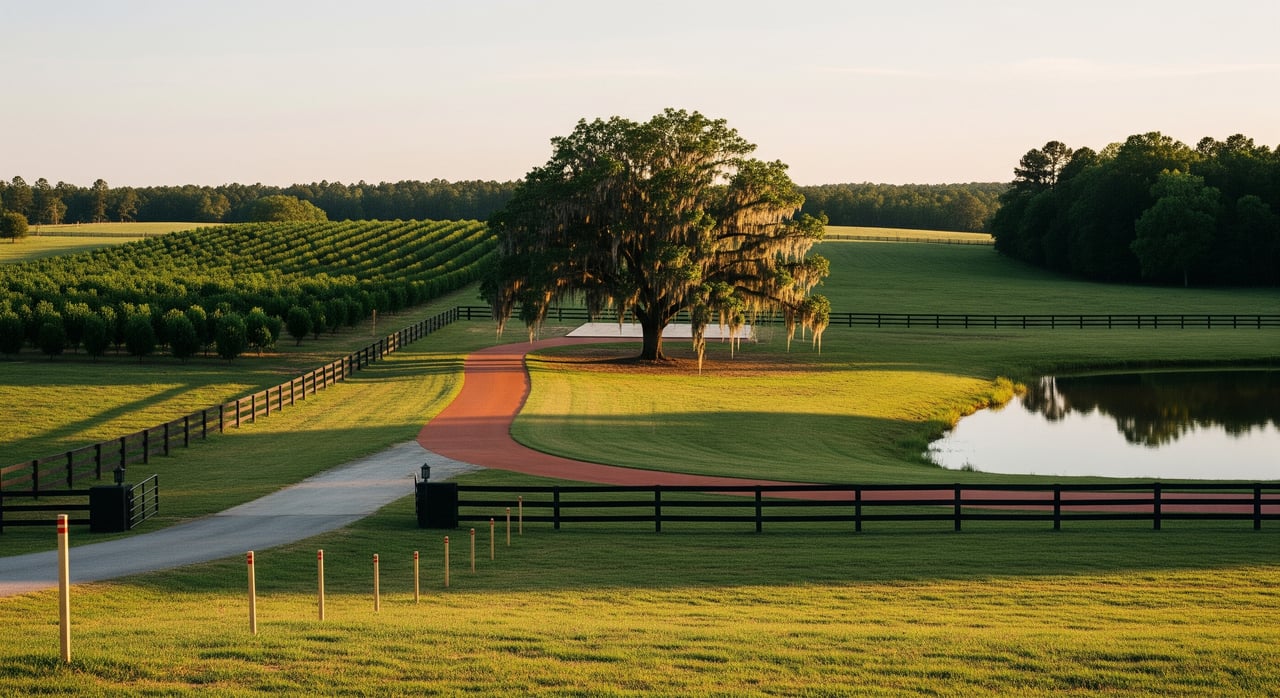
Thinking about buying land near Tifton? A pretty tract can be full of promise, but raw land and acreage often come with more questions than a typical home purchase. If you want to avoid surprises, you need to understand zoning, access, utilities, flood risk, soils, and tax treatment before you close. Let’s walk through what matters most when buying land and acreage near Tifton, Georgia.
Start With Jurisdiction
One of the first things you need to confirm is whether the property is inside the City of Tifton or in unincorporated Tift County. That matters because the city and county follow different planning and land-use rules.
Inside the city, the City of Tifton Planning and Zoning process applies. In unincorporated areas, the Tift County Unified Development Code controls land use. Before you assume you can build a home, place a manufactured home, divide the land, or use it for agricultural purposes, verify which jurisdiction governs the tract.
Tifton also notes that its online code may not reflect the latest amendments. That means a quick online search is not enough for a major land purchase. You should confirm current zoning and land-use details directly with the city or county office.
Know What the Zoning Allows
Zoning shapes what you can actually do with a property. That includes whether you can build now, what type of home is allowed, and whether certain improvements need extra review.
In unincorporated Tift County, the AG district is designed for agricultural uses and has a minimum lot size of 3 acres. It allows single-family dwellings and HUD-approved manufactured homes. That can make AG land appealing if you want space for a home site and agricultural use on the same tract.
The county’s R-1 district requires at least 1 acre. It allows individual water supply and private sewage disposal with Environmental Health approval, but it does not allow HUD-approved manufactured homes. That is a key distinction if home type flexibility matters to you.
Tift County also has water resource districts tied to groundwater recharge areas, river corridor protection, and wetlands. These areas can carry added limitations because the county identifies them as sensitive to things like septic effluent, agricultural chemicals, animal waste, and paving that affects groundwater recharge.
Check Access Before You Fall in Love
Land can look ideal on a map and still be difficult to use if legal or physical access is weak. Access affects daily use, construction, financing, resale, and even emergency response.
In Tift County AG land, access may be by private road, driveway, or non-terminable easement, but it must be at least 20 feet wide and platted of record before a building permit can be issued. If that route does not meet county road standards, a buyer may need to sign an acknowledgment that emergency access may be inadequate.
For subdivision lots, county rules generally require frontage on a paved public street with a 60-foot right-of-way. If a driveway crosses a public street ditch, the drainage pipe under that public street must be approved by the county road department.
If a road is not publicly maintained, ongoing upkeep may become your responsibility. That is why access should be verified with the same care as title and survey work.
Confirm Utilities at the Parcel
Do not assume that water, sewer, gas, or power are ready just because service exists somewhere nearby. Land buyers should verify service availability for the specific parcel.
The combined Tifton-Tift County Utilities Department provides water, sewer, and natural gas to citizens and surrounding areas, and City of Tifton Water Services serves customers throughout Tift County. Even so, availability can vary by tract, and service at the road does not always mean a simple or inexpensive connection.
If the property is not served by central water or sewer, you will likely need to explore private well and septic options. You should also ask about electric service availability and potential connection costs early in the process.
Soils and Septic Can Make or Break a Deal
For rural and semi-rural land, buildability often comes down to the ground itself. A tract may have enough acreage on paper but still face limitations because of soils, slope, drainage, or seasonal water table conditions.
The USDA Natural Resources Conservation Service says soil surveys can help evaluate flooding, water tables, soil pH, slope, and limitations that affect septic absorption fields, foundations, crop production, and recreation uses. That makes soil review one of the smartest early due diligence steps for land buyers near Tifton.
If the property will use a septic system, county environmental health offices handle permits, inspections, complaints, and related questions in Georgia. If a home already has septic, future additions such as pools, detached garages, or outbuildings may also require local environmental health review.
In practical terms, you want to know whether the land supports the use you have in mind before closing. A soil issue discovered too late can change your plans and your budget.
Understand Well Requirements
If you plan to use a private well, there are important placement and health considerations. Georgia Department of Public Health guidance says wells must be installed by a licensed water well contractor, and the contractor must notify the county health department before drilling.
DPH also says a well should not be placed in a flood-prone area unless the casing extends at least two feet above the highest known flood level. It also lists minimum horizontal separations, including 50 feet from a septic tank and 100 feet from a septic drainfield.
If the property already has a well, do not treat that as a simple box checked. Georgia DPH recommends annual bacterial testing and chemical screening every three years for private well water, which is especially relevant when you are inheriting an existing rural water source.
Review Flood Risk Early
Flood risk is not something to check at the very end. It should be part of your first round of property review because it can affect buildable area, insurance costs, financing, and well placement.
FEMA’s Flood Map Service Center is the official source for checking flood hazards. FEMA says areas with a 1 percent annual chance of flooding are considered high-risk areas, and over the life of a 30-year mortgage, that creates about a one-in-four chance of flooding.
Even if only part of a tract falls in a higher-risk area, that still matters. You will want to understand where a home site, driveway, well, septic field, and any future structures could realistically go.
Think Through Financing Options
Land financing is often different from financing a move-in-ready home. The right option depends on whether you are buying for agricultural use, a future home site, or a combination of both.
For farm and ranch purchases, USDA Farm Service Agency Direct Farm Ownership Loans may be used to buy a farm or ranch, enlarge an existing operation, purchase easements, and pay closing costs. The joint financing option can cover up to 50 percent of the property cost or value, and the down payment program requires a 5 percent cash down payment.
For buyers planning a residence on eligible rural property, USDA Rural Development Single Family Housing programs may offer qualified borrowers a way to buy or build with no money down. Eligibility depends on both the borrower and the property, so it is important to verify fit before counting on that route.
Don’t Overlook Agricultural Tax Treatment
If you are buying acreage for agricultural or timber use, property taxes may be an important part of your long-term math. Georgia’s conservation use valuation program can reduce assessed value for qualifying land.
Under this program, qualifying property is assessed at 40 percent of current use value. However, the owner must keep the property in qualifying use for 10 years and file on time with the county board of tax assessors.
This is one of those areas where details matter. A tax benefit can be valuable, but only if the property qualifies and your planned use lines up with the program’s rules.
Build a Smart Closing Checklist
Before you close on land near Tifton, make sure your due diligence covers the basics that most often affect use and ownership. Land purchases are much smoother when you confirm the major issues before you are fully committed.
A practical checklist should include:
- Jurisdiction confirmation
- Zoning verification
- Legal and physical access review
- Flood hazard check
- Soil review
- Septic or well feasibility review
- Utility availability confirmation
- Title search
- Survey review
- Easement and restriction review
- Agricultural tax treatment review, if applicable
- Confirmation that the deed will be properly recorded
Possession alone does not equal legal title. Title issues, liens, easements, and restrictions can affect both ownership and use, so these steps deserve real attention.
Why Local Guidance Matters
Buying land and acreage near Tifton can be rewarding, but it is not usually a plug-and-play purchase. The right tract for you depends on your goals, whether that means building a home, placing a manufactured home, creating a small farm setup, holding land for investment, or preserving future options.
That is where local knowledge makes a difference. When you work with someone who understands Tifton, Tift County, and the practical questions that come with rural and in-town land, you can move forward with more confidence and fewer surprises.
If you are considering land or acreage near Tifton, Terri-Partners can help you evaluate property options, understand local factors, and take the next step with practical guidance.
FAQs
What should you check before buying land near Tifton, GA?
- You should confirm jurisdiction, zoning, access, flood risk, soils, title, easements, utility availability, septic or well feasibility, and any agricultural tax treatment before closing.
Can you build a house on AG land in Tift County?
- In many cases, yes. Tift County’s AG district allows single-family dwellings and HUD-approved manufactured homes, but access, lot size, and utility or septic and well approvals still need to line up.
Does land near Tifton need city or county approval?
- It depends on where the property is located. Land inside Tifton city limits follows the city’s planning and zoning process, while unincorporated land follows the Tift County Unified Development Code.
Can you use a private well on acreage in Tift County?
- In many cases, yes, but Georgia DPH says wells must be installed by a licensed water well contractor and must meet placement standards, including separation from septic components.
How do you check flood risk for land near Tifton?
- FEMA’s Flood Map Service Center is the official place to review flood hazards and see whether part of a tract falls in a higher-risk flood area.
Are there financing options for acreage near Tifton, GA?
- Depending on the property and your plans, financing may include USDA Farm Service Agency farm ownership options for farm or ranch purchases or USDA Rural Development programs for eligible rural home sites.
Can land in Tift County qualify for agricultural tax benefits?
- Some agricultural or timber acreage may qualify for Georgia’s conservation use valuation program, which assesses qualifying property at 40 percent of current use value if program requirements are met.